

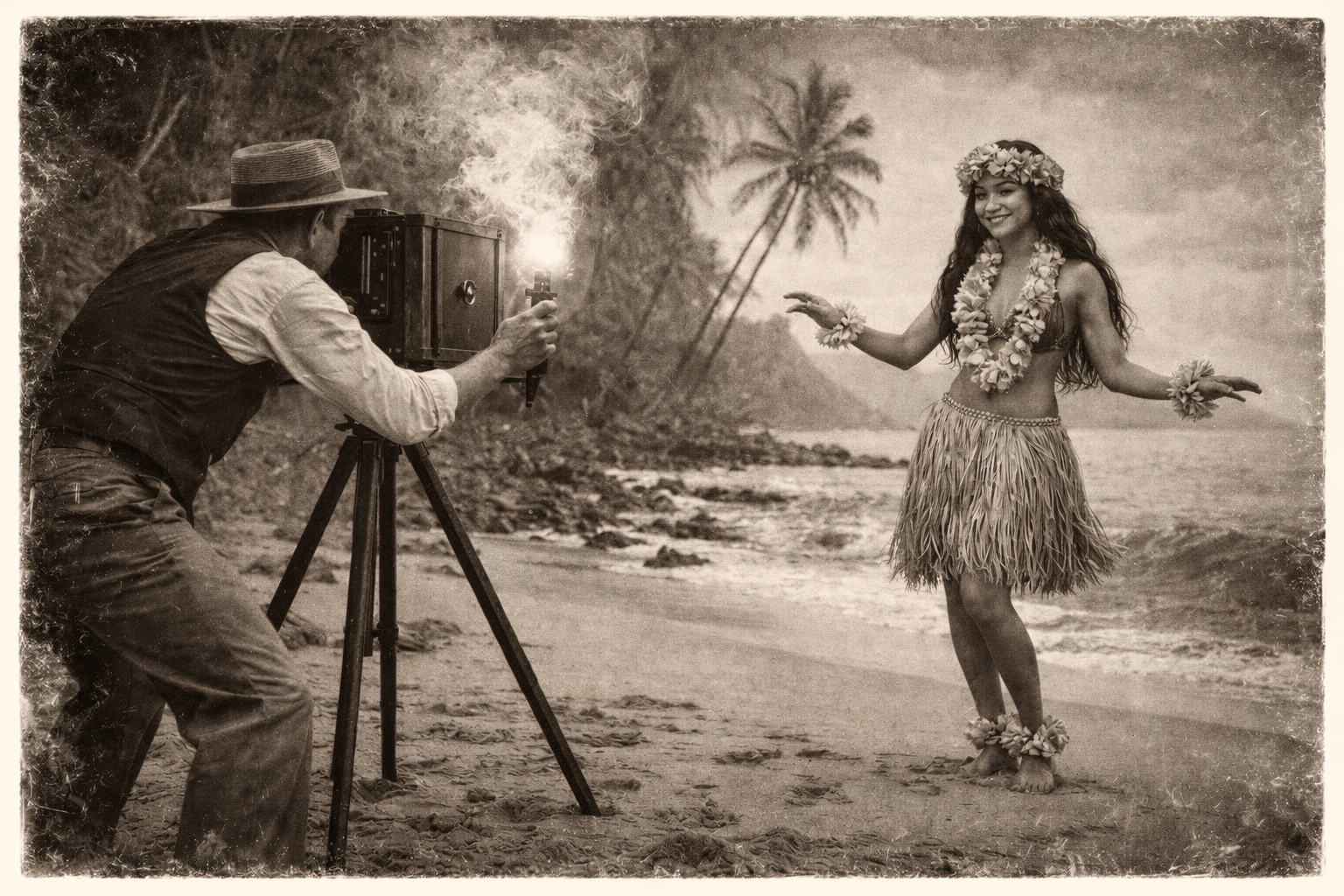
Photography arrived in Hawaiʻi long before digital cameras, social media, or modern tourism. From early glass plate images to today’s professional photography, the islands have been documented with care, patience, and respect for place. At 808 Pictures, we believe understanding the history of photography in Hawaiʻi deepens our connection to the craft and strengthens the way we photograph the islands today.
This is a look back at the earliest photographs of Hawaiʻi, the cameras that made them possible, and how modern Hawaiʻi photographers continue this legacy across every island.
The Earliest Photographs of Hawaiʻi
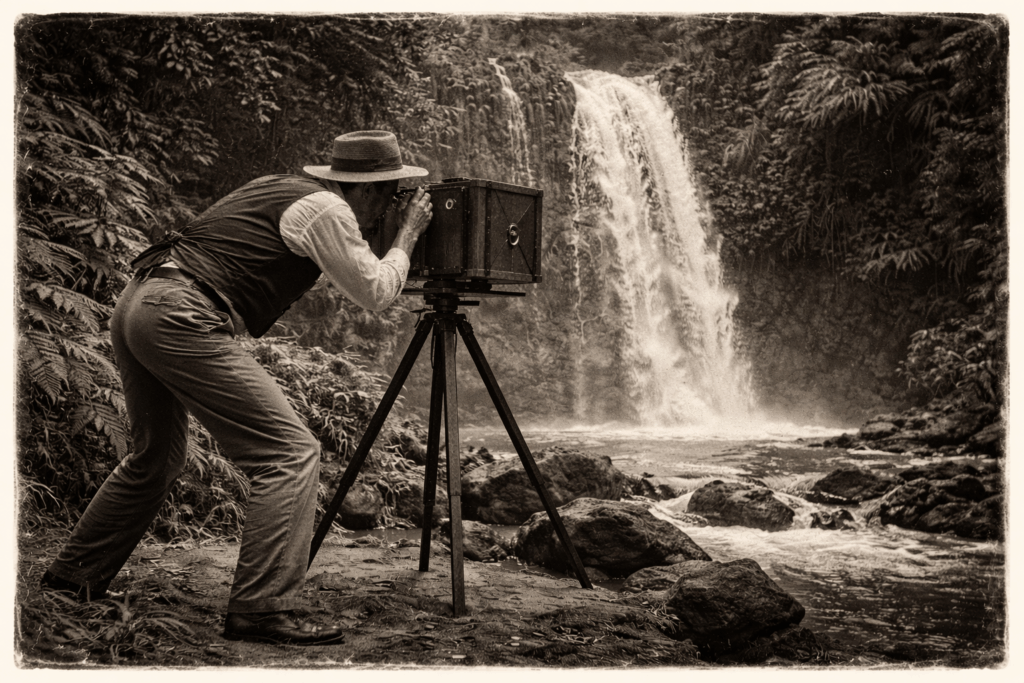
Photography reached Hawaiʻi in the mid-1800s, shortly after the invention of the daguerreotype. Early photographers documented Hawaiian royalty, harbors, plantations, villages, and untouched coastlines using heavy equipment and fragile materials.
Many of the earliest photographs of Hawaiʻi were created using:
- Daguerreotype cameras
- Wet plate collodion processes
- Large-format wooden bellows cameras
- Glass negatives developed on site
These images now serve as priceless historical records, showing what Hawaiʻi looked like before modern development. Many survive today in public archives and museums as public-domain photographs.
Early Cameras & Techniques Used in Hawaiʻi
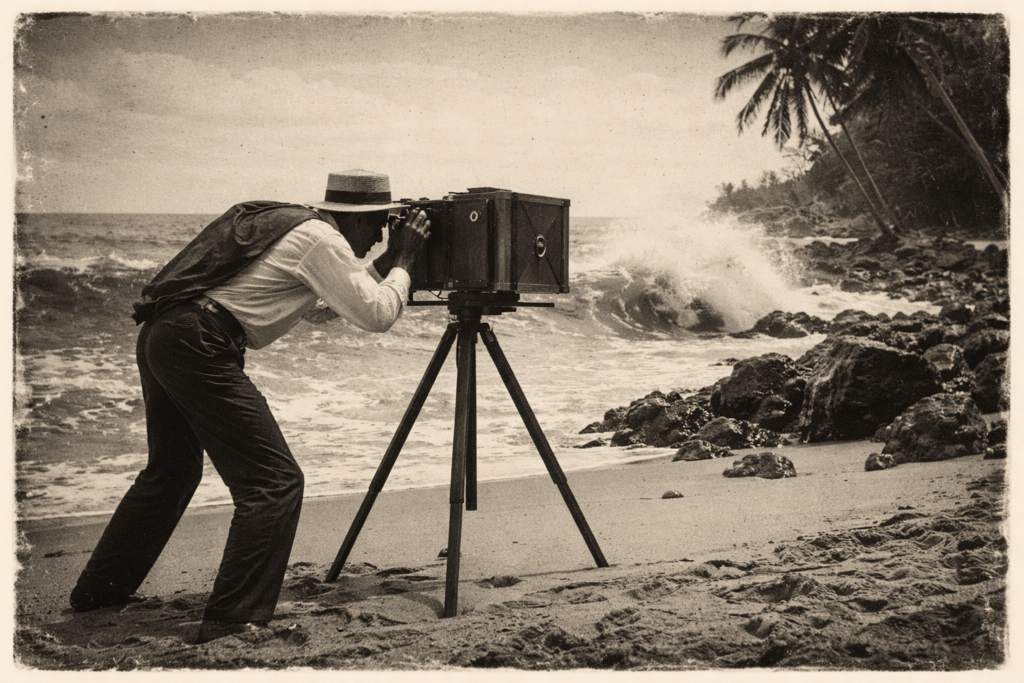
Early photography in Hawaiʻi required extraordinary effort. Cameras were large, exposure times were long, and photographers often carried glass plates, chemicals, and portable darkrooms through sand, heat, and rain.
Key characteristics of early Hawaiʻi photography included:
- Large tripod-mounted cameras
- Long exposure times requiring subjects to remain still
- Natural light only
- Careful composition before every image
Because materials were limited and expensive, photographers were intentional. Every photograph had purpose.
Photography Across the Hawaiian Islands
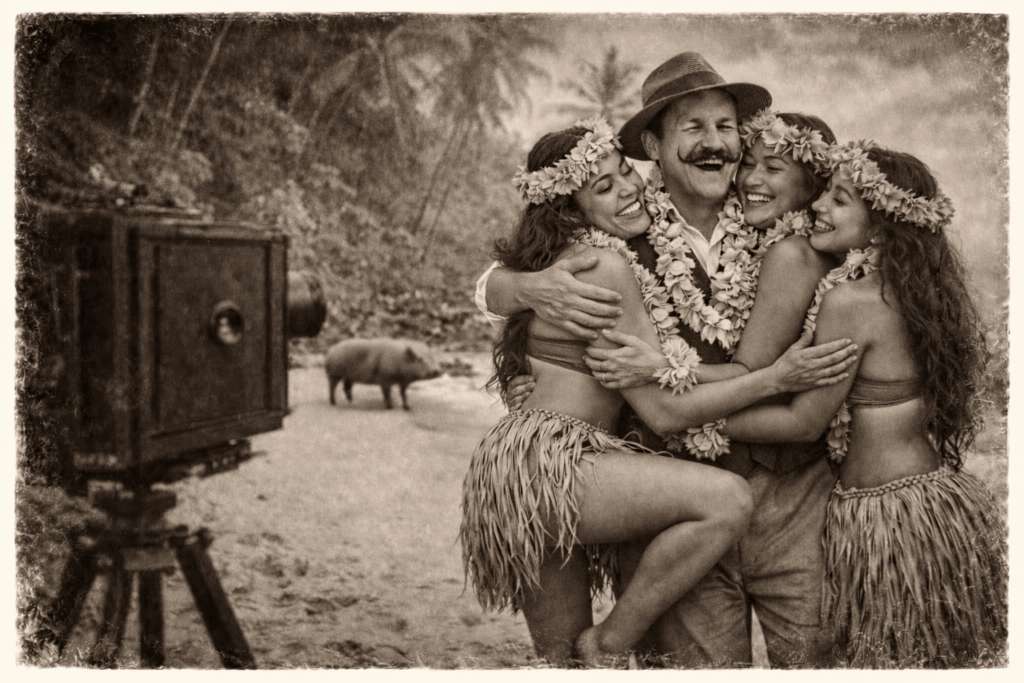
Each island presented its own visual language, challenges, and opportunities.
Oʻahu
Oʻahu quickly became a center of early photography due to Honolulu’s ports, royal residences, and growing population. Historic images show Waikīkī before hotels, Honolulu Harbor in its early days, and quiet streets where the capital grew over time.
These locations remain iconic today, and the tradition continues with our
and
who document the same coastlines with modern tools and timeless respect.
Honolulu’s role as a photographic hub still shapes the island’s visual identity through our
Maui
Early photography on Maui focused on plantation life, Lahaina’s historic harbor, and the island’s dramatic coastlines. Wide compositions and careful framing emphasized both scale and atmosphere.
That thoughtful approach to Maui photography lives on through our
who continue to capture families, weddings, and landscapes with the same sense of place.
Kauai
Known as the Garden Isle, Kauai was photographed with reverence. Early photographers focused on lush valleys, waterfalls, and rugged coastlines, often placing small figures within vast natural settings.
This perspective still defines the island and is reflected today by our
who honor Kauai’s natural beauty through patient, light-driven photography.
Hawaiʻi Island (Big Island)
The Big Island presented some of the most dramatic subjects: volcanoes, lava fields, black sand beaches, and powerful shorelines. Early photographers worked under difficult conditions to capture the raw energy of the land.
That tradition continues with our
who photograph the island’s scale and intensity with care and respect.
What Early Hawaiʻi Photographers Taught Us
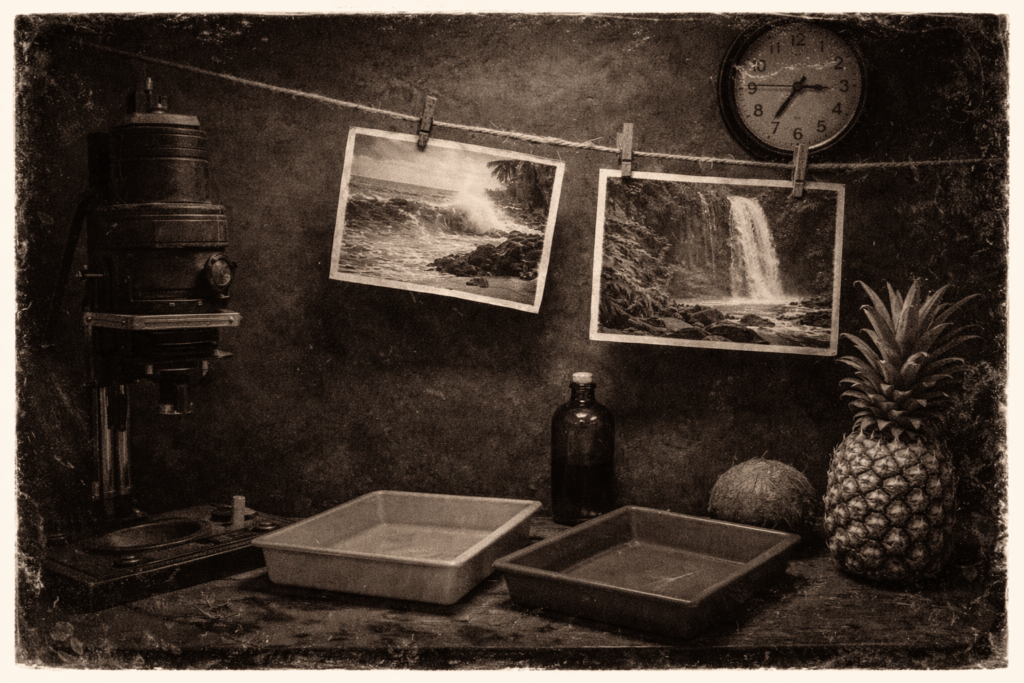
Despite limited technology, early photographers mastered principles that still guide great photography today:
- Patience over speed
- Composition over quantity
- Light over equipment
- Story over spectacle
They photographed slowly and intentionally, allowing the land and people to lead the image.
The Arrival of the First Consumer Cameras in Hawaiʻi
For decades, photography in Hawaiʻi was limited to professionals. That changed in the late 1800s when cameras became accessible to everyday people.
Important early cameras that reached Hawaiʻi included:
- Daguerreotype cameras (1840s–1850s)
- Wet plate collodion cameras (1850s–1870s)
- Large-format wooden cameras
- Kodak box cameras
- Kodak Brownie (introduced in 1900)
- Folding cameras designed for travel
When Kodak introduced the idea of “You press the button, we do the rest,” photography became personal. Families, travelers, and residents began documenting beach days, celebrations, hula dancers, fishing trips, and daily island life.
Photography shifted from formal documentation to storytelling.
From Film to Digital in Hawaiʻi
As technology evolved from glass plates to film to digital sensors, the heart of photography in Hawaiʻi remained unchanged. Light, timing, emotion, and respect for place continued to matter more than equipment.
Modern photographers benefit from advanced tools, but the lessons from early cameras still shape meaningful images today.
Carrying the Legacy Forward at 808 Pictures
At 808 Pictures, we see ourselves as part of this ongoing photographic story. While our cameras are lighter and our workflows faster, the principles remain the same:
- Photograph with intention
- Honor Hawaiʻi’s landscapes
- Respect the people and culture
- Capture moments that feel real
Across Oʻahu, Waikīkī, Honolulu, Maui, Kauai, and the Big Island, our photographers continue a tradition that began more than a century ago.
Why This History Still Matters
Photography preserves memory. Hawaiʻi’s photographic history reminds us that images shape how future generations understand the islands.
By honoring the past, modern Hawaiʻi photographers ensure today’s moments are captured with care, authenticity, and meaning.
At 808 Pictures, we’re proud to continue this tradition — photographing Hawaiʻi not just as a destination, but as a place with deep history and lasting beauty.
From historic cameras to today’s flagship gear
How 808 Pictures blends tradition with the very best modern tools
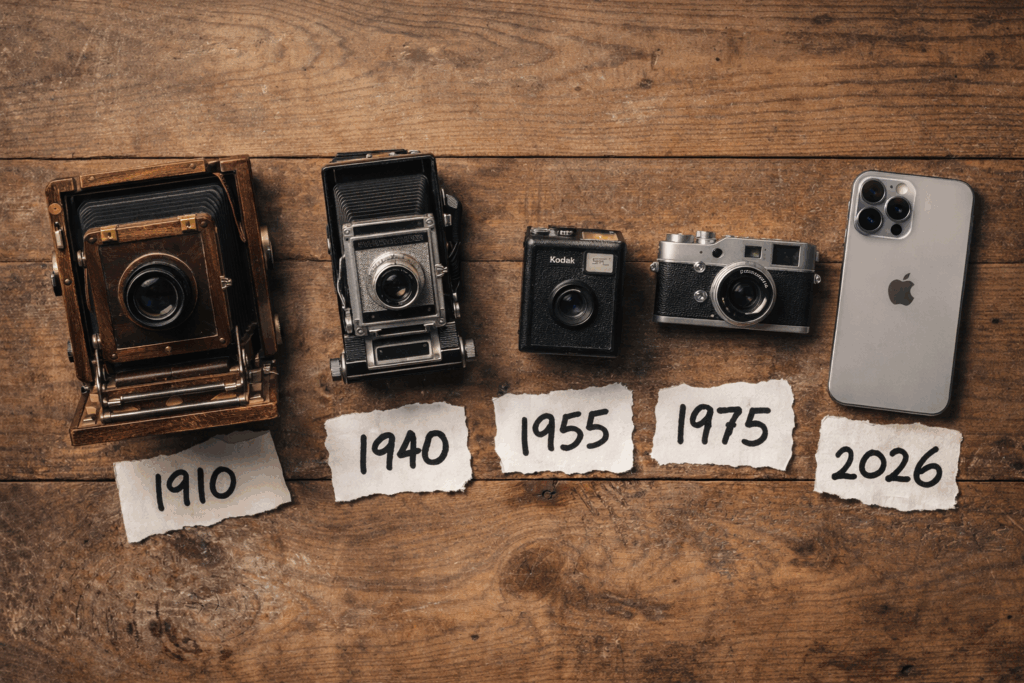
We love the stories behind the earliest cameras that arrived in Hawaiʻi—the heavy wooden bellows, glass plates, and the first simple Kodak boxes. Those cameras taught patience, respect for light, and purposeful framing. Today, we honor that legacy by using state‑of‑the‑art flagship mirrorless cameras from the world’s top brands, paired with pro lighting and accessories.
This modern gear gives our photographers the freedom to capture island moments that are both timeless and technically exceptional—whether it’s a glowing sunset wedding on the beach, a playful family session in Waikīkī, or dramatic portraits near lava rocks or waterfalls.
Why flagship full‑frame mirrorless matters for your photos
Flagship mirrorless systems deliver several real, practical benefits:
- Higher resolution and cleaner files for big prints or detailed crops
- Fast, precise autofocus and tracking for kids, dancers, or action scenes
- Excellent low‑light performance for twilight, indoor venues, or candle‑lit moments
- Pro‑level video ability when clients also want clips for reels, teasers, or personal keepsakes
These aren’t just marketing points—they’re what let your photographer work quietly, confidently, and creatively in any condition, without missing the moment.
The brands and technology we rely on
Our team uses the leading full‑frame mirrorless systems—Nikon, Canon, Sony, and Fuji—each chosen for real strengths and world‑class performance.
Nikon
We use Nikon’s newest, pro‑grade mirrorless bodies built on the most advanced technology Nikon offers. For example, Nikon’s flagship mirrorless models feature full‑frame sensors, extremely high resolution, fast continuous shooting, and top‑tier video options; the current Nikon Z-series flagship highlights these traits, with features like full‑frame capture, up to 120 fps stills, and powerful subject detection.
These tools help our photographers freeze decisive moments—whether it’s wind‑blown hair, quick laughter, or a bride’s veil moving in the breeze—and still deliver files rich in detail and color.
Canon
For clients who need unmatched reliability, focusing, and speed—especially for action, sports‑style moments, or highly dynamic scenes—our team also uses Canon’s professional mirrorless systems. Canon’s flagship models are full‑frame, built for high image quality, very fast shooting, and advanced subject detection, making them superb for weddings, proposals, and events around the islands.
This means smooth, sharp images even when the sun is setting fast, or when a moment is only a fraction of a second long. It also lets us deliver both stunning stills and useful video content when needed.
Sony
Sony’s highest‑end mirrorless bodies are also a core part of our kit—renowned for combining ultra‑high resolution, top autofocus performance, and serious video capability in one body. Sony’s current professional line emphasizes full‑frame capture, advanced processing, and specs that push the boundaries of what’s possible today.
In practical terms, this gives us flexibility: crisp detail for large prints, or smooth slow‑motion clips that still feel cinematic and true to the moment.
Fuji
Fuji’s cameras, lenses, and color science also find a place in our arsenal when the look, size, or handling best suits a specific shoot. Whether a smaller, quieter body for an intimate ceremony or specialized glass for a particular aesthetic, Fuji allows our photographers to choose the right tool for the creative job—without ever compromising quality.
Lighting, modifiers, and pro accessories
Great cameras are only part of the story. To deliver consistent, beautiful images across Honolulu’s bright beaches, the lush valleys of Kauai, or the moody cliffs of the Big Island, we always pair our cameras with professional lighting equipment:
- High‑power flash units for fill light at sunset, against backlight, or when the sun is too harsh
- Softboxes, reflectors, and diffusion to create gentle, flattering light for portraits and families
- Portable stands and grips suited for windy beaches or uneven terrain
- Reliable power and backup systems so the session never stops for lack of battery or light
This lets our team sculpt light exactly where it’s needed—softening shadows, adding sparkle to eyes, or preserving colors when the sun is blazing. The result is images that look both natural and rich, day or night, without forcing people into stiff poses.
The result you see in your gallery
When you book with 808 Pictures, you’re getting more than a camera—you’re getting a team who understands the islands, the light, and the story you want to tell. Our flagship cameras and pro lighting allow us to:
- Capture fleeting expressions with confidence
- Work efficiently in any weather or light condition
- Produce files ready for large prints, heirloom albums, or digital sharing
- Offer a consistent, premium look that feels classic rather than trendy
All of this is part of how we carry forward the lesson from Hawaiʻi’s earliest photographers: use the best tools available, but always shoot with respect, intention, and care.